 USA
USA France
 Spain
Spain
100 Proactive Classroom Management Tips for Every Educator
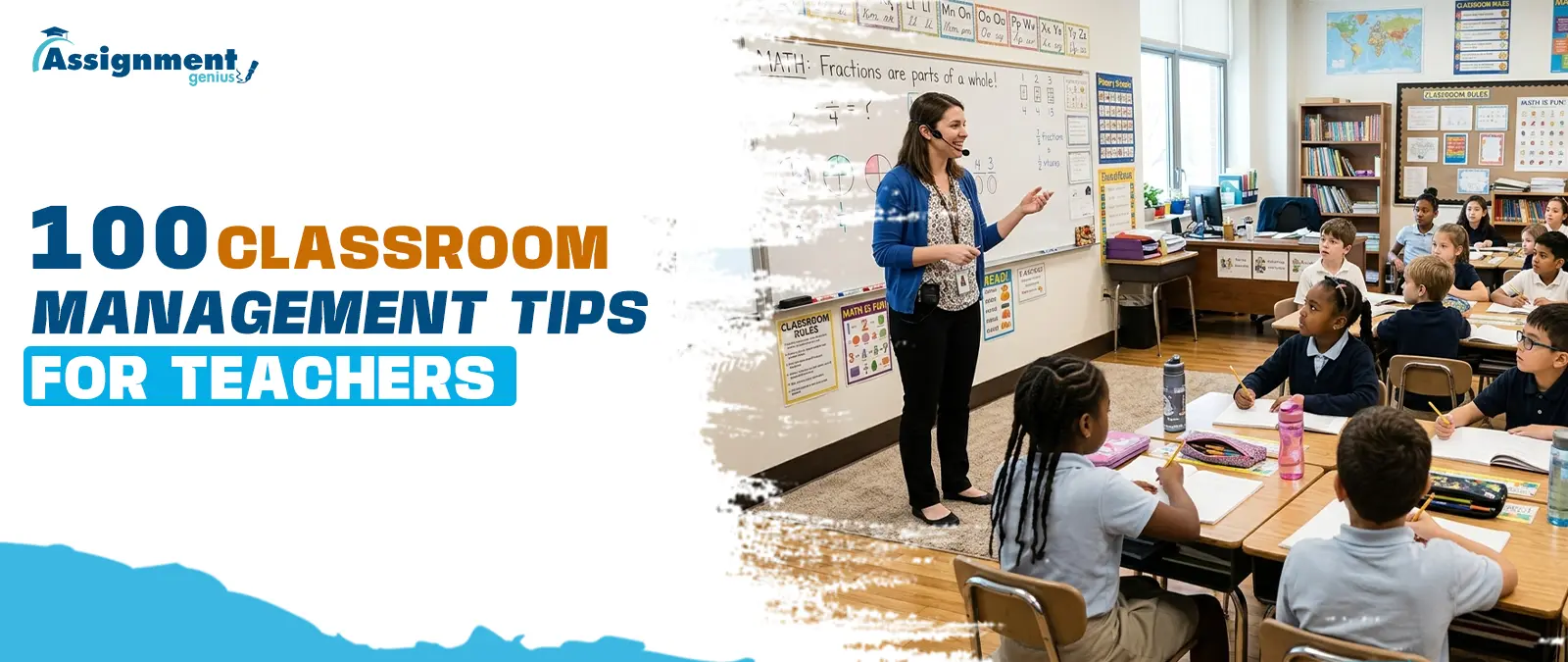
Successful classroom management forms the basis of significant learning. A smooth classroom allows students to feel secure, interested, and encouraged to join the classroom, and teachers to be able to concentrate on effective teaching instead of spending most of their time dealing with distractions. Proactive classroom management is a shift in which emphasis is on trying to prevent than trying to solve the problem. By establishing the expectations, by creating the positive relations and by providing the routines, the structured and directed by the definite expectations, the educators are able to form the environment, where respect, responsibility, and collaboration will thrive.
In the contemporary and diverse classrooms, educators need practical methods that can be applicable in different ages, styles of learning in addition to behavioural needs. Such small, deliberate steps as establishing regular procedures, making students feel ownership, and employing positive feedback may have a significant impact on day-to-day classroom communication.
This guide proposes 100 proactive classroom management strategies that could be used to assist teachers in establishing effective, structured, and interactive learning environments where students and teachers unwind with success.
The Foundation: Best Classroom Management Tips for Success
The management of the classroom must contain a good foundation based on clarity, consistency, and good relationship. As soon as the teachers have established the expectations and have created trust in their relationships with the students, the classroom automatically turns into the place where the learning will be a success. Instead of inevitably responding to the disturbances, teachers who emphasize proactive approaches provide the setting that promotes responsibility, participation, and respect.
Subsequent strategies include the establishment of accurate expectations early on and the establishment of good student-teacher relationships.
Setting Expectations on Day One
The opening day of school establishes the attitude of the whole term of study. Students soon become familiar with what is permissible and what will be the classroom culture like. The ability of the teachers to communicate clearly rules, routines, and expectations of learning early can help avoid a lot of behavioral difficulties in the future. The proper organization at the beginning makes students feel safe and know their contribution in the positive learning environment.
Tips for Setting Expectations on Day One
- Clarify classroom rules and ensure such rules are very simple, definite, and memorable.
- Engage learners in developing classroom rules to have a sense of belongingness.
- Show routines, e.g. getting in the classroom, handing in assignments, asking questions.
- Keep post classroom expectations visible to students so that they can easily refer to them.
- Demonstrate how you hope the students will behave, e.g. respect and attentiveness.
- The outcomes of good and bad behavior should also be discussed beforehand.
- Do the important things on the initial few days until students are at ease.
- Always be consistent in implementation of rules in order to create trust and justice.
- Ask students to inquire regarding what to expect and how to do things in the classroom.
- Promote good behaviors in the initial stage to achieve a positive classroom culture.
Building Student-Teacher Rapport
The positive teacher-student relationship is one of the best classroom management tools. When students feel respected, valued and understood, they are likely to get involved, cooperate and stay interested in the process of learning. Rapid rapport does not require major gestures but few minor gestures can create strong relationships that will be useful in academic success and good conduct.
Tips for Building Student-Teacher Rapport
- Learn and remember the names of all the students properly as early as possible.
- Care about students and their interests, hobbies as well as experiences.
- At the door, Greet welcomes students in order to make them feel welcome.
- Foster open communication hence students would be comfortable to raise concerns.
- Apply positive wording and recognize the efforts of the students.
- Be amiable and considerate and respectful in communication.
- Reward large and small student accomplishments.
- Be empathetic and patient in responding to problems or errors of students.
Classroom Management Tips for New Teachers: A Survival Guide
Entering into teaching as a profession is exciting yet very daunting. Balancing between teaching the lesson and dealing with student behavior and ensuring an effective classroom environment is a problem that usually bothers new teachers. This transition might be made much easier through early development of proactive classroom management. Combining direct authority with empathy and preventive actions might assist in forming the new teachers to have well-structured, respectful classrooms in which the students feel safe and motivated to learn.
Establishing Authority with Empathy
Being a good classroom manager does not imply being strict and remote. The most effective teachers are those who are authoritative and at the same time empathetic whose policies are strict yet are understanding and respectful towards the students. When students perceive that their teacher is fair and supportive they will be more willing to cooperate, participate and follow the classroom expectations.
Below are tips for classroom management for new teachers to achieve authority by being understanding.
- Put down the rules in the classroom and give explanations.
- Be relaxed and assertive when speaking to the students about their behavior.
- Always be steady in executing rules in order to make students feel that there is fairness.
- Do not judge behavior and hear the views of students.
- Be patient towards the students who commit mistakes and use it as a learning experience.
- There is no need to yell, but you should speak decisively but not offensively.
- Reward the effort and improvement of students on a regular basis.
- Be firm and friendly at the same time.
- Resolving behavioral problems should be done privately where possible.
- Show respect to students in order to make them reciprocate that respect.
8 Proactive Strategies to Prevent Disruptions
Prevention is better than cure because it is more effective to prevent than to correct the disruption. The number of off-task students could be reduced by teachers by making sure that the students are occupied, there are definite routines and the lessons are delivered in a systematic way so that the classroom life becomes less problematic. The active planning will help the teachers predict the potential challenges and guide the students towards the healthy interaction.
- Prepare interesting lessons and make students actively engaged in the learning process.
- Create routines in the classroom to create less uncertainty.
- Give clear instructions prior to activities or transitions.
- Routine classroom visits through walking around and observing students.
- Include interactive elements of learning like discussions or group work.
- Redirect behavior by using nonverbal cues such as eye contact or gestures.
- Offer specific time constraints to tasks in order to stay focused and productive.
- Reward good performance so that the students will remain focused.
Grade-Specific Strategies: From Preschool to Elementary
The Classroom management strategies must also change with the development stages of the students. Young learners need order, patience and definite routine but elementary pupils are better served by more responsibility and encouragement by the use of rewards. With the help of the management techniques which can be adjusted to the requirements of the age groups, teachers will be able to develop the conditions of learning which can foster curiosity, teamwork, and healthy behavior.
The strategies enumerated below are aimed at the practical strategies at pre-school, kindergarten and elementary classes.
Preschool Classroom Management Tips for Early Learners
Preschool classrooms are full of curiosity, vitality and speedy development. Little children are only developing necessary social and emotional skills and thus routines and mild instructions are very important. At this phase, classroom control is based on the concepts of structure, visuals, and positive reinforcement to ensure that children learn the expectations and feel safe in the learning environment. The following are the preschool classroom management tips that should be considered in the appropriate classroom management.
Preschool Classroom Management Tips are:
- Creating routine activities on a daily basis gives the children an idea of what to expect.
- Make visual timetables with images to assist the students in tracking activities.
- Make directions brief, concise and clear.
- Transition between activities using songs, rhymes or signals.
- Praise and encourage in positive behavior.
- Give practical exercises to the children.
- Prepare well-structured learning stations like reading, play and art stations.
- Demonstrate proper behavior and social relationships.
- Turn undesirable behavior in a very gentle way and steer the children towards a more desirable option.
Classroom Management Tips for Kindergarten Teachers
The kindergarten students are starting to gain independence yet they require a powerful guidance and order. During this age, classroom management aims at assisting children to develop restraint, instructions and cooperative participation. Routine, interesting activities and positive reinforcement are some of the factors that enable kindergarten teachers to have a supportive and efficient classroom environment.
The following are Classroom Management Tips of Kindergarten Teachers:
- Create routines of daily activities in the classroom.
- Enforce rules by use of visual reminders and charts.
- Introduce physical activity to assist students to dissipate energy.
- Conduct classroom procedures on a regular basis until the students are fully trained.
- Apply story telling and role plays in order to exemplify good behavior.
- Provide positive reinforcement in the form of praise or stickers.
- Make lessons interactive to ensure there is attention and interest.
- Employ very clear signals to capture the attention of students.
- Promote team building by using small groups.
Managing Elementary Classrooms: Routines and Rewards
Students in elementary grades can be more responsible and thus can work towards achieving a good classroom atmosphere. The key to successful management at this level is a combination of the strict routines with the motivational techniques like the use of rewards, recognition, and the ability to become a student leader. Students will be more attentive when they know what is expected of them and are encouraged to perform better.
Tips for Managing Elementary Classrooms
- Create routines regarding lessons and transitions that happen on a daily basis.
- Getting the classroom rules and expectations straight.
- Take reward systems e.g. points, badges, recognition charts.
- Foster leadership among students in the classroom and responsibilities.
- Give very precise directions prior to undertaking duties.
- Split up bigger tasks into smaller manageable tasks.
- Reward good conduct in an open forum.
- Inclusiveness of teamwork through collaborative activities.
- Quickly resolve problems and stay focused.
- Promote reflection in order to teach students to control themselves.
Navigating Modern Environments: Virtual and Hybrid Tips
The contemporary classrooms do not have the physical space restrictions. As the model of online education and hybrid delivery appeared, teachers have to adjust classroom management practices to the online classroom. Researching the engagement, participation, and behavior management in online environments demand proper expectations, organized communication, and the usage of technology.
The following tactics assist teachers in having clean, dynamic, and effective learning processes both in the virtual world and in entering new classrooms.
Virtual Classroom Management Tips for Digital Engagement
The peculiarities of virtual classrooms are distraction and absence of face-to-face communication and dissimilarity of participation of students. Educators have to strike the balance between the strict way of instruction and interactive learning to make sure that they keep the students attentive and engaged. Digital tools and routine-setting could be implemented to ensure the Internet-based education is interactive and could be handled by instructors and learners.
The Virtual Classroom Management Tips for Digital Engagement are as follows:
- Establish behavior, participation, and communication rules of the online classroom.
- At the start of every session have a short agenda to inform students what they are going to expect.
- Ask students to record videos where necessary to make it more active.
- Take advantage of interactive applications such as polls, quiz and chat discussions.
- Divide break lessons into smaller parts in order to keep attention.
- Group discussions and collaborative learning should be done with the help of breakout rooms.
- Address students by name to motivate them to attend classes.
- Create signals or digital indications on how to ask questions.
- Keep an eye on the chat in order to answer questions or concerns.
- Quickly conclude sessions in reflection or feedback.
Strategies for Substitute Teachers: Walking into a New Room
Substitute teachers are also usually placed in classrooms without much time to prepare and unknown students. In this case, the structure should be built as fast as possible to preserve the order and to continue learning without any troubles. Through expectations, confidence, and adherence to the plans of the classroom teacher, substitutes can comfortably handle the classroom and provide a worthy learning environment.
The substitute teacher tips that the teachers must keep in mind while walking into a new classroom are as follows:
- Check out lesson plans and classroom rules of the teacher in advance before the day begins.
- Get to know the children at the start of the class.
- Be calm and confident to create the effect of authority.
- Stick to the routine in the normal classroom.
- Write on the board clear instructions to be followed by students.
- Manage the disturbances in a calm and fair manner.
- Ensure that students are active in lesson plan activities.
- Write elaborate reports to the regular teacher regarding the progress and behavior of the day.
Behavior Management: Tips and Tricks for Challenging Moments
Even in the controlled classrooms, there are difficult situations that are bound to occur. Successful behavior management is concerned with reacting in a calm, fair, and constructive manner in case of any disruption. Rather than depending on discipline, teachers may apply proactive methods that will drive children to make improved decisions and understand themselves. The non-verbal cues, the usage of proximity, or the logical consequence strategies contribute to ensuring the disorder in the classroom and at the same time to securing the positive relationships and encouraging the further development of the behavior.
Non-Verbal Cues and The Power of Proximity
The best remedy to disruptive behavior is sometimes to remain silent. Body language and positioning can give the teacher time to redirect the students and leave the lesson moving quickly. The techniques help reduce embarrassment to the students and make sure that small distractions do not turn into bigger ones.
Tips for Using Non-Verbal Cues and Proximity
- Give eye contact to indicate to a student that he needs to get back on track.
- Approach off-task students and distract them by moving closer.
- Take a moment between lessons to teach so that it enables the students to be aware of unacceptable behavior.
- Gesture or use hand signs as a reminder to students about what is expected in the classroom.
- Sit close to places where the distraction usually happens.
- Lean a hand slightly on a desk as a reminder to be focused.
- Facial expression can be used to show approval or concern.
- Keep on teaching, but wait to correct the behavior as the lesson goes on.
- Create set signals in regard to everyday classroom reminders.
Logical Consequences vs. Punishment
The logic consequences are aimed at showing students the consequences of their behaviors as opposed to merely punishing them. Logical consequences are attached to behavior unlike punishment which at times cause resentment among students. Such a practice fosters responsibility, equality, and chances of students learning to rectify their errors.
Tips for Using Logical Consequences Effectively
- Consequences should be connected to the behavior.
- Justify the consequence to students so that they can know why it was done.
- Impose punishment equally and without favor to students.
- Allow students to be corrected in their behavior.
- Do not be emotional when dealing with misbehavior.
- Promote the process of reflection to help students learn out of the situation.
- Take corrective measures, e.g. apologize or repair what went wrong.
- Pay attention to the education of correct behavior and not just punishment of errors.
- Reward good behavior in order to stimulate positive decisions in future.
Conclusion
Classroom management should not be about control of the students, but about the environment where learning, respect and working together can flourish. Educators can avoid numerous issues with the help of clear expectations, establishing strong relationships, and proactive strategies and avoid many of them before their emergence. It does not matter whether one is dealing with preschoolers, elementary school pupils or courses with virtual classrooms; little actions can go a long way. This guide has 100 tips that provide effective strategies that can be adapted by the teachers to their own classes. Through structure, empathy and positive reinforcement, educators are able to provide positive learning environments where students are motivated, responsible and willing to succeed on a daily basis.
FAQ: Common Questions on Classroom Behavior
What is the most effective classroom management strategy for new teachers?
The best approach is to have clear expectations and routine work in the beginning. In case of communicating rules to students, demonstrating proper behavior, and imposing rules through fair and reasonable ways, students learn the boundaries and feel safe, which contributes to the establishment of an organized and positive learning environment.
How do classroom management tips for preschool differ from elementary strategies?
Preschool strategies emphasize on simple routines, visual and guided behavior since young learners are in the development of social and emotional abilities. Elementary strategies on the other hand focus on responsibility, routine, cooperation and reward schemes that promote self-regulation and independence.
What are "proactive" classroom management tips versus "reactive" ones?
Proactive classroom management is all about avoiding disruptions before they take hold through establishment of expectations, relationship as well as sustaining interesting lessons. Reactive strategies are those strategies that respond to behavior once it occurs like punishment or corrective efforts. The proactive strategies tend to produce better and productive classrooms.
How can I manage classroom behavior in a virtual or hybrid setting?
Teachers can control the behavior in the virtual environment through establishing clear online policies, structured agendas, participation encouragement and the use of interactive platforms such as polls or breakout rooms. Regular schedules, close attention, and proper communication serve to keep the performer occupied and less distracted.

Related Posts
-
 Feb 28, 2025Dr. Jennifer Adams
Learn College English Grammar Easily | 2025 Tips
Struggling with college grammar? Discover the best methods and resources to master advanced English grammar rules easily and boost your writing skills.
Read More
-
 Feb 28, 2025Dr. Jennifer Adams
10 Proven Tips to Stay Focused While Studying
Can't concentrate? Discover 10 science-backed techniques to eliminate distractions, improve your focus, and study more effectively for longer periods.
Read More
-
 Feb 28, 2025Dr. Jennifer Adams
Student Assignment Tracker: Organize Your Work
Never miss a deadline again. Learn how to use a student assignment tracker effectively with templates and tools to stay organized and reduce stress.
Read More
-
 Apr 09, 2026Dr. Jennifer Adams
Recognized The Significance of Time Management for Students
Recognize the critical significance of time management for students. Learn how it reduces stress, boosts grades, and creates a healthy work-life balance.
Read More